

In This Guide
- 1. What Is Progesterone?
- 2. Micronized Progesterone vs Synthetic Progestins
- 3. Who Needs Progesterone?
- 4. Oral Progesterone (Prometrium)
- 5. Vaginal Progesterone
- 6. Injectable Progesterone
- 7. Progesterone in IVF Luteal Support
- 8. Progesterone in Transgender Women
- 9. Dosing Protocols Summary
- 10. Side Effects & Contraindications
- 11. Cost & Insurance
- 12. Progesterone Products
- 13. Frequently Asked Questions
What Is Progesterone?
Progesterone is a steroid hormone produced primarily by the corpus luteum of the ovary after ovulation, by the placenta during pregnancy, and in smaller amounts by the adrenal glands. It is one of the two principal female sex hormones, working in concert with estrogen to regulate the menstrual cycle, prepare the endometrium for implantation, maintain pregnancy, and modulate mood, sleep, and body temperature. The term "progesterone" (abbreviated P4) refers specifically to the molecule C₂₁H₃₀O₂ that the human body produces endogenously. When a pharmaceutical product contains the exact same molecule, it is called bioidentical or micronized progesterone.
During a normal menstrual cycle, progesterone levels are low during the follicular phase, surge after ovulation, peak in the mid-luteal phase around day 21 (roughly 10–20 ng/mL), and then fall rapidly if pregnancy does not occur. This fall triggers menstruation. In pregnancy, placental progesterone rises into the hundreds of ng/mL and maintains the gestation until delivery. Outside the reproductive cycle, progesterone and its neuroactive metabolite allopregnanolone are potent positive modulators of GABA-A receptors in the brain — which is why progesterone has sedating, anxiolytic, and sleep-promoting effects.
In hormone replacement therapy (HRT), progesterone has two central jobs. The first is endometrial protection: when a person with a uterus takes estrogen, the endometrium is stimulated to grow, and without progesterone (or a progestin) to oppose that growth, the risk of endometrial hyperplasia and endometrial cancer rises significantly. Progesterone opposes estrogen in the endometrium by converting proliferative tissue into secretory tissue and inducing shedding. The second job is symptom management — improving sleep, stabilizing mood, and helping with vasomotor symptoms — and, in transgender women, contributing to breast and body feminization.
Progesterone products fall into three broad categories: oral micronized progesterone (Prometrium and generics), vaginal progesterone (Crinone 8% gel, Endometrin tablets, and compounded suppositories), and injectable progesterone in oil (PIO). Each route has distinct pharmacokinetics, tissue selectivity, and clinical uses detailed below.
Key Takeaway
Progesterone is the body's natural partner to estrogen. In modern HRT, micronized (bioidentical) progesterone is preferred over older synthetic progestins because it provides comparable endometrial protection with a better breast, cardiovascular, and metabolic safety profile. It is required for any person with a uterus taking systemic estrogen, and it is increasingly used for sleep, mood, luteal support in IVF, and feminization in transgender women.
Micronized Progesterone vs Synthetic Progestins
One of the most important concepts in modern HRT is the distinction between progesterone (the natural molecule, also called P4) and progestins (synthetic compounds that bind the progesterone receptor but are not chemically identical to natural progesterone). This distinction was blurred for decades because both were used interchangeably to "oppose" estrogen in HRT — but accumulating evidence, culminating in large 2024–2025 reviews, shows they are not clinically equivalent.
Micronized Progesterone (P4)
Micronized progesterone is pharmaceutical-grade progesterone that has been mechanically reduced to tiny particles so it can be absorbed through the gut. It is chemically identical to the progesterone the ovary produces. Brand names include Prometrium (oral), Crinone (vaginal gel), Endometrin (vaginal tablet), and compounded formulations. Because it is bioidentical, it binds all the same receptors as endogenous progesterone, including the progesterone receptor in the endometrium and breast, the GABA-A receptor (via allopregnanolone), and the mineralocorticoid receptor (with mild anti-aldosterone activity).
Synthetic Progestins
Synthetic progestins are structurally different molecules designed to bind the progesterone receptor. They include medroxyprogesterone acetate (MPA / Provera), norethindrone (norethisterone), levonorgestrel, drospirenone, dienogest, and the 19-nortestosterone derivatives used in many oral contraceptives. Because they differ from natural progesterone, they also bind other steroid receptors to varying degrees — androgen, glucocorticoid, estrogen, and mineralocorticoid receptors — producing off-target effects.
Breast Safety: A Critical Difference
Systematic reviews and meta-analyses of HRT trials, including follow-up analyses from the Women's Health Initiative and large European cohorts such as E3N and the French MISSION study, consistently show that the breast cancer signal associated with combined HRT is driven predominantly by synthetic progestins, especially MPA. Micronized progesterone used in menopausal HRT does not appear to meaningfully increase breast cell proliferation or breast cancer risk during the first 5 years of use, whereas MPA does. A 2025 review of progesterone in menopause confirmed that micronized progesterone is safer for the breast than synthetic progestins while providing comparable endometrial protection when dosed correctly.
Why Bioidentical Matters
For menopausal HRT in a person with a uterus, current guidance from the North American Menopause Society (NAMS / The Menopause Society) and the Endocrine Society is clear: micronized progesterone should be considered first-line when an oral progestogen is chosen, because of its better breast, cardiovascular, and metabolic profile compared with MPA.
Endometrial Protection
Both micronized progesterone and synthetic progestins provide effective endometrial protection when dosed correctly. Standard protocols for endometrial protection with oral estrogen are 200 mg micronized progesterone cyclically (12–14 days per month) or 100 mg daily continuously. Vaginal progesterone also provides effective endometrial protection at lower systemic doses because of the "first uterine pass" effect, where vaginally delivered progesterone concentrates in uterine tissue.
Cardiovascular & Metabolic Effects
Micronized progesterone is largely neutral or mildly beneficial on blood pressure, lipids, and insulin sensitivity. It has mild anti-mineralocorticoid activity and does not worsen HDL cholesterol. In contrast, some synthetic progestins (notably MPA) attenuate estrogen's favorable effects on HDL and can worsen insulin resistance. Drospirenone, a newer spironolactone-derived progestin, shares some favorable mineralocorticoid properties but carries a higher VTE signal in oral contraceptives.
Who Needs Progesterone?
Progesterone therapy is indicated in several distinct clinical situations. Understanding which indication applies to you determines the route, dose, and schedule that will be prescribed.
- Menopausal people with a uterus taking estrogen HRT (mandatory). Systemic estrogen without a progestogen increases the risk of endometrial hyperplasia and endometrial cancer. Any person with an intact uterus on systemic estrogen must receive progesterone or a progestin to protect the endometrium. People who have had a hysterectomy generally do not need progesterone for endometrial protection, though some providers still add low-dose progesterone for sleep or mood.
- Perimenopause with disrupted cycles, heavy bleeding, PMS, or insomnia. In perimenopause, ovulation becomes irregular and progesterone production falls before estrogen does. Cyclic micronized progesterone (200 mg at bedtime, days 14–25 of the cycle) often restores cycle regularity, reduces heavy bleeding, improves sleep, and stabilizes mood.
- PCOS and anovulation. Women with polycystic ovary syndrome often do not ovulate and therefore do not make their own progesterone, leaving the endometrium unopposed. Monthly or bimonthly cyclic progesterone protects the endometrium and induces regular withdrawal bleeding.
- Luteal phase defect. In some people with unexplained infertility or recurrent early miscarriage, luteal-phase progesterone supplementation may be considered after ovulation.
- IVF and assisted reproduction. All IVF cycles require exogenous progesterone for luteal support, typically vaginal (Crinone 8% gel or Endometrin tablets), started the evening of oocyte retrieval and continued through 10–12 weeks of gestation.
- Transgender women on feminizing HRT (optional). Progesterone is not required for feminization but is increasingly added to regimens based on 2023 Amsterdam UMC data showing improved breast development.
- Preterm birth prevention. In pregnancy, vaginal progesterone is used to reduce the risk of preterm birth in people with a short cervix or a prior spontaneous preterm birth (specialized obstetric indication).
Oral Progesterone (Prometrium)
Prometrium is the original FDA-approved brand of oral micronized progesterone, and generic oral micronized progesterone is widely available. Oral dosing is the most common and convenient route for menopausal HRT and for sleep/mood indications. Available strengths are 100 mg and 200 mg soft gel capsules; compounded 25–300 mg capsules are also available.
Pharmacokinetics
Oral progesterone undergoes substantial first-pass metabolism in the liver, converting a significant fraction to neuroactive metabolites including allopregnanolone and pregnanolone, which are potent positive allosteric modulators of GABA-A receptors. This first-pass conversion is precisely why oral progesterone produces sedation and sleep improvement — effects that vaginal progesterone does not replicate to the same degree.
Standard Dosing Protocols
- Continuous combined HRT (postmenopause + estrogen): 100 mg at bedtime daily, sometimes 200 mg.
- Cyclic HRT (perimenopause + estrogen): 200 mg at bedtime for the last 12–14 days of each cycle (typically days 14–25), allowing a predictable withdrawal bleed.
- Sleep and mood (with or without estrogen): 200–300 mg at bedtime. Randomized trials have shown that 300 mg oral micronized progesterone at bedtime improves deep (slow-wave) sleep in postmenopausal women without next-day cognitive impairment.
- PCOS / anovulation (endometrial shedding): 200 mg daily for 10–14 days every 1–3 months to induce a withdrawal bleed.
Why Bedtime Dosing?
Oral progesterone should almost always be taken at bedtime. The sedating effects of allopregnanolone peak 1–4 hours after the dose, making it useful for sleep onset and maintenance, but the same sedation would cause drowsiness and impaired alertness if the dose were taken in the morning. Taking it with food increases absorption and peak levels; the manufacturer recommends taking it at bedtime on an empty stomach or with a light snack.
Peanut Allergy Warning
Prometrium capsules contain peanut oil as the suspending vehicle. Prometrium is contraindicated in people with a known or suspected peanut allergy. Patients with peanut allergies should instead use a compounded oral progesterone (typically suspended in olive oil or another vehicle), vaginal progesterone, or an alternative delivery route. Several generic manufacturers now produce peanut-oil-free oral micronized progesterone; confirm the vehicle with your pharmacist.
Vaginal Progesterone
Vaginal progesterone bypasses first-pass hepatic metabolism and delivers high local concentrations to the uterus via a "first uterine pass" effect. This makes it especially useful for endometrial protection, IVF luteal support, and patients who cannot tolerate the sedation or GI effects of oral progesterone. The downside is that systemic progesterone levels measured in blood are relatively low, which can be misleading — the drug is still working effectively at the target tissue.
Crinone 8% Vaginal Gel
Crinone 8% gel (one prefilled applicator = 1.125 g of gel containing 90 mg of progesterone) is a bioadhesive vaginal gel built on a polycarbophil delivery system. The polycarbophil binds to the vaginal mucosa and releases progesterone over a sustained period, producing a steady endometrial concentration from a single daily or twice-daily application. Crinone 4% (45 mg) is also available for indications requiring a lower dose. Crinone is FDA-approved for:
- Luteal support in IVF / assisted reproduction: 8% gel once daily, or twice daily in women with partial or complete ovarian failure.
- Secondary amenorrhea: 4% gel every other day for 6 doses to induce withdrawal bleeding.
Endometrin Vaginal Tablets
Endometrin is a 100 mg vaginal insert given two or three times daily for luteal support in IVF. It is a small tablet that dissolves after insertion and is generally well-tolerated, with less residue than gel formulations.
Compounded Vaginal Suppositories
Compounding pharmacies can prepare custom vaginal progesterone suppositories in a range of strengths (typically 25–400 mg) for patients with specific dosing needs or allergies to commercial vehicles. These are frequently used in infertility practices and when commercial products are unavailable.
Advantages & Disadvantages of Vaginal Delivery
Advantages: bypasses first-pass metabolism, high uterine tissue concentration for endometrial protection, no sedation, no liver exposure, steady delivery from bioadhesive vehicles like Crinone, and useful in people who do not tolerate oral formulations. Disadvantages: can be messy or cause vaginal discharge; not helpful for sleep because it does not produce high allopregnanolone levels; some users find application inconvenient; and because systemic levels are lower, it is not preferred when sleep or mood benefits are desired.
Injectable Progesterone
Progesterone in oil (PIO) is an intramuscular injection of progesterone dissolved in sesame, olive, or ethyl oleate oil. It produces reliably high serum levels and was historically the standard of care for luteal support in IVF. Typical dosing is 50 mg IM daily beginning the evening of oocyte retrieval and continuing until placental progesterone takes over at 10–12 weeks gestation. PIO is painful at the injection site, can cause sterile abscesses, lumps, and bruising, and requires a partner or clinician to administer the deep IM injection. Because of these drawbacks and the equivalent clinical outcomes shown for vaginal progesterone in multiple trials, vaginal progesterone has largely replaced IM progesterone for routine IVF luteal support. PIO is still used when patients cannot tolerate vaginal delivery, when frozen embryo transfer protocols call for it, or when a clinic has specific protocols favoring injectable use.
Progesterone in IVF Luteal Support
In a natural menstrual cycle, the corpus luteum left behind after ovulation produces enough progesterone to support an early pregnancy until the placenta takes over at roughly 8–10 weeks gestation. In IVF, the controlled ovarian stimulation and oocyte retrieval process disrupts normal corpus luteum function, leaving insufficient endogenous progesterone. Exogenous progesterone is therefore required for every IVF cycle to allow successful implantation and early pregnancy maintenance.
Standard Crinone Protocol
The most widely used luteal support regimen in modern IVF is Crinone 8% vaginal gel, one applicator (90 mg) once daily, started the evening of oocyte retrieval. For patients with partial or complete ovarian failure (for example, donor egg or frozen embryo transfer cycles on a programmed protocol), Crinone 8% is given twice daily. Progesterone support is continued through the beta-hCG pregnancy test and, if positive, through approximately 10–12 weeks of gestation, when placental progesterone production becomes fully self-sustaining. The dose is then tapered under the supervision of the fertility clinic.
Endometrin and PIO Alternatives
Endometrin 100 mg vaginal tablets two or three times daily is an FDA-approved alternative to Crinone with similar clinical outcomes. Intramuscular PIO 50 mg daily is reserved for patients who cannot tolerate vaginal delivery or for certain frozen transfer protocols. Many clinics now use a combination regimen (vaginal Crinone plus a weekly or twice-weekly PIO) in frozen embryo transfer cycles where higher progesterone exposure has been associated with improved outcomes.
Clinical pearl: serum progesterone levels on vaginal progesterone are typically lower than on IM progesterone, but this does not reflect inadequate therapy because vaginal delivery concentrates progesterone in the uterus via the first uterine pass. Do not switch routes or add injections based on a low serum level alone unless directed by your fertility specialist.
Progesterone in Transgender Women
The role of progesterone in feminizing HRT for transgender women has been debated for decades. Older guidelines omitted progesterone because its benefits for breast development and feminization were not well established, and early synthetic progestins were associated with unfavorable cardiovascular and breast effects. More recent research — and strong patient preference — has led many clinicians to include oral micronized progesterone in feminizing HRT regimens, with ongoing research clarifying dose and long-term safety.
The 2023 Amsterdam UMC Trial
A landmark 2023 randomized controlled trial from Amsterdam UMC evaluated the addition of oral micronized progesterone to standard estradiol-based feminizing HRT in transgender women. The trial reported that adding progesterone was associated with up to approximately 30% greater increase in breast volume compared with estradiol alone over the study period, together with patient-reported improvements in body composition and satisfaction. Breast development remains the most commonly cited reason transgender women request progesterone. Optimal dose and duration have not yet been definitively established, and long-term safety data in this population are still accumulating.
Typical Dosing in Transgender HRT
Commonly used regimens in transgender feminizing care include:
- Oral micronized progesterone 100–200 mg at bedtime daily (most common), started alongside or after establishing stable estradiol levels.
- Cyclic dosing (for example, 200 mg at bedtime for 14 days on, 14 days off) used by some clinicians who believe the pulsatile pattern mimics physiologic cycling and may support breast development.
- Vaginal or rectal suppositories 100–200 mg for patients with significant first-pass sedation or GI intolerance.
Patient-reported benefits frequently include improved sleep, mood stability, reduced anxiety, softer skin, and subjective improvement in breast fullness and shape. Potential drawbacks include sedation, breast tenderness, fluid retention, and theoretical concerns about long-term breast safety that should be discussed with a knowledgeable prescriber. Progesterone for transgender women is best managed by a clinician experienced in gender-affirming care who can individualize dose, monitor response, and counsel on the current state of the evidence.
Dosing Protocols Summary
| Indication | Standard Dose | Schedule | Route |
|---|---|---|---|
| Menopause + estrogen (continuous) | 100–200 mg | Daily at bedtime | Oral micronized |
| Perimenopause (cyclic) | 200 mg | Days 14–25 of cycle, at bedtime | Oral micronized |
| Sleep & mood | 200–300 mg | Nightly at bedtime | Oral micronized |
| IVF luteal support (standard) | 90 mg (Crinone 8%) | Once daily (BID if ovarian failure) | Vaginal gel |
| IVF luteal support (tablet) | 100 mg (Endometrin) | 2–3 times daily | Vaginal tablet |
| IVF luteal support (IM) | 50 mg | Daily | Intramuscular (PIO) |
| Trans women feminization | 100–200 mg | Daily or cyclic, at bedtime | Oral micronized |
| PCOS / anovulatory bleeding | 200 mg | 10–14 days every 1–3 months | Oral micronized |
Side Effects & Contraindications
Micronized progesterone is generally well-tolerated. The most common adverse effects are related to its GABA-ergic sedation and mild fluid-regulating properties. Understanding the expected effects helps patients use progesterone safely and appropriately.
Common Side Effects
- Drowsiness and sedation — expected and usually beneficial when dosed at bedtime; avoid daytime dosing and avoid driving immediately after taking a dose.
- Dizziness or lightheadedness — typically mild and dose-dependent.
- Breast tenderness — can occur during the first 1–3 months and usually improves with time or dose adjustment.
- Bloating and mild fluid retention — less common with progesterone than with synthetic progestins because progesterone has mild anti-mineralocorticoid activity.
- Mood changes — most patients report improved mood and anxiety, but a minority experience a paradoxical dysphoric reaction, especially at higher doses.
- Vaginal discharge or local irritation — specific to vaginal gel or suppository delivery.
- Headache — uncommon; typically mild.
Absolute and Relative Contraindications
Do Not Use Progesterone If You Have
Known or suspected breast cancer; undiagnosed vaginal bleeding; active thromboembolic disorder (DVT, PE, or recent thromboembolism); severe liver disease or hepatic dysfunction; known hypersensitivity to progesterone or components of the formulation (including peanut allergy if using Prometrium); missed abortion or certain complications of pregnancy. Use with caution in people with a history of depression, migraine, asthma, cardiac or renal dysfunction, and diabetes.
Cost & Insurance
Progesterone therapy is affordable for most patients in 2026. Generic oral micronized progesterone and generic vaginal progesterone are widely available and typically covered by commercial insurance and Medicare Part D under standard preferred-drug tiers. Branded products like Prometrium and Crinone are often covered with a modest copay.
| Product | Typical Cash Price | Insurance Copay |
|---|---|---|
| Generic oral micronized progesterone 100 mg (30 caps) | $20–$40 | $0–$15 |
| Generic oral micronized progesterone 200 mg (30 caps) | $30–$60 | $0–$20 |
| Prometrium 200 mg (30 caps) | $50–$110 | $10–$40 |
| Crinone 8% gel (15 applicators) | $250–$400 | $20–$75 |
| Endometrin 100 mg (21 inserts) | $180–$320 | $20–$60 |
| Progesterone in oil 50 mg/mL (10 mL vial) | $40–$90 | $0–$25 |
| Compounded progesterone suppository | $40–$120 | Variable |
IVF-related progesterone may be bundled into fertility clinic treatment packages and billed separately from pharmacy benefits. Manufacturer savings programs are occasionally available for branded products. Hormone Pharma coordinates insurance prior authorizations and specialty pharmacy delivery for all progesterone products.
Progesterone Products
Hormone Pharma dispenses FDA-approved oral, vaginal, and compounded progesterone through our licensed pharmacy network. All prescriptions are written and managed by our board-certified endocrinology and gynecology team after a telehealth consultation.
Prometrium 200 mg
Oral micronized progesterone (brand). 30 softgel capsules. Bedtime dosing for menopause HRT, perimenopause, and sleep support.
Start Consultation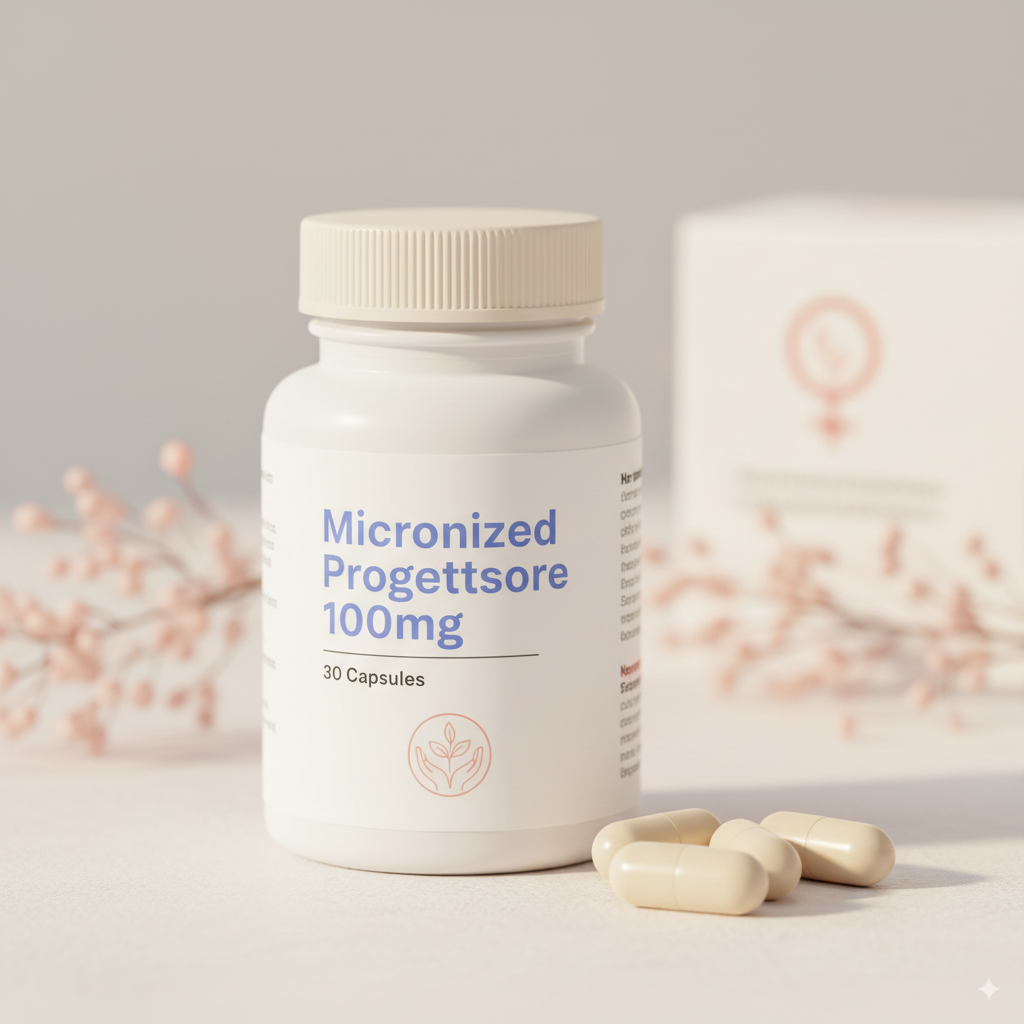
Micronized Progesterone 100 mg
Generic oral micronized progesterone. 30 capsules. Bioidentical to natural progesterone; ideal for continuous combined HRT.
Start Consultation
Crinone 8% Vaginal Gel
Bioadhesive polycarbophil gel, 90 mg per applicator. FDA-approved for IVF luteal support and secondary amenorrhea.
Start Consultation
Compounded Progesterone
Custom oral capsules or vaginal suppositories (25–400 mg) in peanut-oil-free vehicles for patients with allergies or specific dosing needs.
Start ConsultationReady to Start Progesterone Therapy?
Confidential telehealth evaluation with board-certified endocrinologists and gynecologists. Bioidentical micronized progesterone, menopause HRT, IVF luteal support, and gender-affirming care.
Start Your AssessmentMedical Disclaimer
This content is for informational and educational purposes only and does not constitute medical advice, diagnosis, or treatment. Progesterone therapy decisions must be individualized and supervised by a licensed clinician. Do not start, stop, or change progesterone therapy without consulting your provider. Seek immediate medical attention for signs of venous thromboembolism (sudden calf swelling or pain, chest pain, shortness of breath), stroke (sudden numbness, weakness, visual loss, or slurred speech), severe allergic reaction (especially with Prometrium, which contains peanut oil), or unexpected vaginal bleeding. Do not drive or operate heavy machinery immediately after taking an oral progesterone dose.