

In This Guide
What Is Thyroid Hormone Replacement?
Thyroid hormone replacement therapy is a lifelong medical treatment prescribed for people with hypothyroidism -- a condition in which the thyroid gland does not produce enough thyroid hormone to meet the body's metabolic needs. Hypothyroidism affects an estimated 4.6% of the U.S. population aged 12 and older, making it one of the most common endocrine disorders. Women are 5 to 8 times more likely to be affected than men, and prevalence rises sharply after age 60.
The thyroid gland is a butterfly-shaped organ at the base of the neck that regulates metabolism through a tightly controlled feedback loop. The hypothalamus secretes thyrotropin-releasing hormone (TRH), which tells the pituitary to release thyroid-stimulating hormone (TSH). TSH then signals the thyroid to produce two hormones: thyroxine (T4), the inactive storage form, and triiodothyronine (T3), the biologically active form. About 80% of T3 is produced peripherally when tissues convert T4 to T3 using the deiodinase enzymes (DIO1, DIO2, DIO3). When thyroid hormone levels drop, the pituitary releases more TSH; when levels rise, TSH falls. This is why TSH is the most sensitive laboratory marker of thyroid status.
Hypothyroidism has several causes. Hashimoto's thyroiditis -- an autoimmune condition in which the body produces anti-thyroid peroxidase (anti-TPO) and anti-thyroglobulin antibodies -- is the most common cause in the United States, accounting for roughly 90% of cases. Other etiologies include post-surgical hypothyroidism (after thyroidectomy for cancer, nodules, or Graves' disease), post-radiation hypothyroidism (after radioactive iodine ablation or head/neck radiation), congenital hypothyroidism (identified through newborn screening), iatrogenic hypothyroidism from medications such as amiodarone, lithium, or interferon, and subclinical hypothyroidism, in which TSH is mildly elevated but free T4 remains within range.
The goals of thyroid hormone replacement, per the American Thyroid Association (ATA) and the American Association of Clinical Endocrinologists (AACE) joint guidelines on hypothyroidism in adults, are threefold: resolve symptoms, normalize serum TSH, and avoid overtreatment. Properly dosed therapy relieves fatigue, restores mental clarity, stabilizes weight, protects cardiovascular health (elevated TSH is associated with increased cholesterol and coronary artery disease), and prevents long-term complications such as myxedema coma. Overtreatment, on the other hand, can produce iatrogenic hyperthyroidism -- raising risks of atrial fibrillation, accelerated bone loss, and anxiety.
Key Takeaway
Levothyroxine remains the ATA standard of care, but combination T4/T3 therapy and natural desiccated thyroid (NDT) are validated options for patients who don't feel well on monotherapy alone. A 2024 meta-analysis found that 52% of treated patients preferred combination therapy over levothyroxine alone.
Symptoms of Hypothyroidism
Hypothyroidism is often called "the great mimicker" because its symptoms overlap with depression, anemia, chronic fatigue syndrome, fibromyalgia, menopause, and even normal aging. Many patients endure years of vague complaints before the correct diagnosis is made. Recognizing the full symptom profile is key to getting appropriate testing and treatment.
Physical Symptoms
- Persistent fatigue -- deep, unrefreshing tiredness that sleep does not relieve
- Cold intolerance -- feeling cold when others are comfortable, cold hands and feet
- Unexplained weight gain -- typically 5-15 pounds, resistant to diet and exercise
- Dry, coarse skin -- particularly on elbows, knees, and shins
- Hair loss and thinning -- diffuse thinning, loss of the outer third of the eyebrows (Queen Anne's sign)
- Constipation -- reduced gut motility, often with bloating
- Muscle weakness and cramps -- especially in proximal muscles (thighs, shoulders)
- Hoarse or deeper voice -- from vocal cord edema
- Puffy face and periorbital edema -- non-pitting swelling around the eyes
- Brittle nails and carpal tunnel syndrome
Cognitive and Mood Symptoms
- Brain fog -- difficulty concentrating, word-finding problems
- Poor short-term memory -- forgetting names, appointments, recent events
- Depression and low mood -- hypothyroidism is found in up to 60% of treatment-resistant depression cases
- Slowed thinking -- mental sluggishness, difficulty processing information
Cardiovascular and Metabolic Symptoms
- Bradycardia -- resting heart rate below 60 bpm
- Elevated LDL cholesterol and triglycerides -- from reduced LDL receptor activity
- Elevated creatine kinase (CK) -- reflecting myopathy
- Diastolic hypertension in some patients
Reproductive Symptoms
- Irregular or heavy menstrual periods (menorrhagia)
- Infertility and recurrent miscarriage -- untreated hypothyroidism is a reversible cause
- Low libido in both men and women
- Erectile dysfunction in men
Subclinical vs. Overt Hypothyroidism
Overt hypothyroidism: TSH is elevated AND free T4 is below normal -- treatment is clearly indicated. Subclinical hypothyroidism: TSH is elevated but free T4 is still within the normal range. Treatment is more nuanced and depends on symptoms, TSH level, antibody status, age, and pregnancy plans. Untreated severe hypothyroidism can progress to myxedema coma, a life-threatening medical emergency with a 30-40% mortality rate.
Diagnosis & Lab Testing
The diagnosis of hypothyroidism is made with blood tests -- physical examination alone is unreliable. The good news is that thyroid testing is inexpensive, widely available, and highly accurate. The challenge is interpreting results correctly in the context of symptoms, age, and life stage.
Primary Test: TSH
Thyroid-stimulating hormone (TSH) is the single most sensitive indicator of thyroid status. Because the pituitary-thyroid feedback loop is logarithmic, small drops in thyroid hormone produce large increases in TSH -- so TSH becomes abnormal before free T4 does. For this reason, TSH is the first-line screening test recommended by the ATA, AACE, and U.S. Preventive Services Task Force.
Reference Ranges
- Most clinical laboratories: 0.4-4.5 mIU/L
- ATA optimal range for most adults: 0.5-2.5 mIU/L (many endocrinologists target this range for treated patients with symptoms)
- Elderly (ages 70-80): 4-6 mIU/L is acceptable -- mild TSH elevation is common with aging and not necessarily pathologic
- Pregnancy (first trimester): below 2.5 mIU/L (trimester-specific ranges apply); untreated hypothyroidism in pregnancy is associated with miscarriage, preterm birth, and impaired fetal neurocognitive development
Additional Tests
- Free T4 (FT4) -- the unbound, biologically available form of thyroxine; confirms whether TSH elevation is accompanied by actual hormone deficiency
- Free T3 (FT3) -- useful in patients on combination therapy or with suspected conversion issues; most patients on levothyroxine have normal FT3 without supplementation
- Anti-thyroid peroxidase antibodies (anti-TPO) -- the most specific marker for Hashimoto's thyroiditis; elevated in ~95% of Hashimoto's patients
- Anti-thyroglobulin antibodies (anti-TG) -- additional Hashimoto's marker; useful when anti-TPO is negative
- Reverse T3 (rT3) -- an inactive metabolite of T4; its clinical utility is controversial and not endorsed by ATA guidelines for most patients
- Thyroid ultrasound -- useful if nodules are palpated or if Hashimoto's changes need visualization
Retesting Schedule
After any dose change or at treatment initiation, TSH should be rechecked at 6-8 weeks. This interval reflects levothyroxine's long half-life (~7 days) -- it takes roughly 4-5 half-lives to reach a new steady state. Testing sooner yields misleading results. Once a stable dose has been achieved and TSH is in the target range, annual monitoring is sufficient for most patients. More frequent testing is warranted during pregnancy, after significant weight changes, or when new medications are added.
Biotin Interference
Biotin (vitamin B7) supplements, common in hair and nail formulas, can cause falsely low TSH and falsely high free T4 on many immunoassay platforms. Stop biotin at least 48 hours -- ideally 72 hours -- before thyroid lab draws to avoid misinterpretation.
Types of Thyroid Medications
The landscape of thyroid medications has expanded significantly since levothyroxine was first synthesized in the 1950s. Today, patients and physicians can choose between synthetic T4, synthetic T3, natural desiccated thyroid, and customized compounded formulations. Each has specific advantages depending on the clinical situation and individual patient response.
Synthetic T4 (Levothyroxine) -- The Standard of Care
Levothyroxine is synthetic L-thyroxine, pharmacologically identical to the T4 your thyroid gland produces. With a half-life of approximately 7 days, once-daily dosing produces stable serum levels. It is classified by the FDA as a narrow therapeutic index (NTI) drug, meaning small changes in dose or absorption can produce meaningful clinical effects. Levothyroxine is the most commonly prescribed medication in the United States, with more than 100 million annual prescriptions, and is the ATA-recommended first-line therapy for hypothyroidism.
- Levothyroxine (generic) -- Available in 12 strengths from 25 mcg to 300 mcg. Color-coded tablets make identification easy. The most economical option.
- Synthroid -- The original brand, manufactured by AbbVie. Some endocrinologists prefer Synthroid for patients with brittle TSH control, as brand consistency between lots is high. Often preferred for narrow-therapeutic-window patients.
- Tirosint -- Levothyroxine in a liquid-filled gelatin capsule (gel cap) with no dyes, gluten, lactose, or alcohol. Fewer fillers mean more consistent absorption for patients with celiac disease, gastritis, lactose intolerance, or those on proton pump inhibitors (PPIs). Tirosint-SOL is an oral liquid formulation for patients who cannot swallow capsules.
- Levoxyl, Unithroid, Euthyrox -- Alternate brand levothyroxines with similar efficacy; bioequivalence between brands varies slightly, so many clinicians recommend staying on one product.
Full replacement dosing averages 1.6 mcg/kg/day, putting most adult patients in the 75-150 mcg range. Elderly patients and those with cardiovascular disease start at much lower doses (12.5-25 mcg) to avoid precipitating angina or arrhythmia.
Synthetic T3 (Liothyronine)
Cytomel (liothyronine) is synthetic T3 -- the biologically active thyroid hormone. Unlike T4's week-long half-life, T3 has a half-life of approximately 24 hours, so its effects rise and fall more sharply. For this reason, T3 is typically dosed twice daily (BID), often with a morning dose to match circadian physiology and an afternoon dose to cover the late-day energy dip.
Cytomel is not used as monotherapy in routine care. Instead, it is added to a reduced levothyroxine dose in combination T4/T3 therapy for patients who remain symptomatic despite normalized TSH on levothyroxine alone. A common approach is to replace 25 mcg of T4 with 5-10 mcg of T3, split into two daily doses. The rationale is supported by observations that some patients -- particularly carriers of the DIO2 Thr92Ala gene polymorphism, which impairs peripheral T4-to-T3 conversion -- feel substantially better with direct T3 supplementation. Approximately 16% of the general population carries this variant.
Natural Desiccated Thyroid (NDT)
Natural desiccated thyroid, historically the only treatment for hypothyroidism before the 1960s, is derived from porcine (pig) thyroid glands and contains a mixture of T4, T3, T2, T1, and calcitonin in a fixed ratio roughly 4:1 T4:T3 by weight. NDT is dosed in "grains," with 1 grain (60 mg or 65 mg depending on manufacturer) providing approximately 38 mcg of T4 and 9 mcg of T3.
- Armour Thyroid -- The oldest and most recognizable NDT brand (Allergan/AbbVie). Available in multiple strengths from 15 mg (¼ grain) to 300 mg (5 grains).
- NP Thyroid -- Manufactured by Acella Pharmaceuticals; frequently prescribed as an alternative to Armour. Note: NP Thyroid had multiple FDA recalls in 2020 and 2023 for sub-potency.
- Nature-Throid / WP Thyroid -- Historically popular NDT products; discontinued in 2020 by RLC Labs and never returned to market.
NDT remains a valid FDA-approved option and is preferred by a substantial minority of patients who report superior symptom relief. A 2024 meta-analysis published in endocrine literature found that approximately 52% of patients preferred combination therapy (T4/T3 or NDT) over levothyroxine monotherapy, though TSH and free T4 outcomes were broadly similar. Concerns include historical lot-to-lot variability, periodic FDA recalls, and the fact that the porcine T4:T3 ratio (4:1) is higher in T3 than the human thyroid's native ratio (~14:1), which can produce transient supraphysiologic T3 peaks.
Compounded Thyroid Medications
Compounding pharmacies can produce customized thyroid formulations tailored to individual patients. Common options include specific T4/T3 ratios (e.g., 90/10 or 80/20), slow-release T3 to flatten the peak-trough curve, and hypoallergenic formulations free of common fillers. Compounded thyroid is not FDA-approved as a finished product (though the active ingredients are), and it is rarely covered by insurance. Costs typically run $40-100 per month. Compounding is most appropriate for patients with multiple medication allergies, complex intolerances, or unique dosing needs not met by commercial products.
Thyroid Medication Comparison
| Feature | Levothyroxine | Synthroid | Tirosint | Armour Thyroid | Cytomel (T3) | NP Thyroid |
|---|---|---|---|---|---|---|
| Hormones | T4 only | T4 only | T4 only (gel cap) | T4+T3+T2+T1 | T3 only | T4+T3+T2+T1 |
| Source | Synthetic | Synthetic | Synthetic | Porcine | Synthetic | Porcine |
| Half-life | ~7 days | ~7 days | ~7 days | T4 ~7d, T3 ~1d | ~1 day | T4 ~7d, T3 ~1d |
| Starting dose | 25-150 mcg | 25-150 mcg | 25-150 mcg | 30 mg (½ grain) | 5-25 mcg | 30 mg (½ grain) |
| Dosing frequency | Daily | Daily | Daily | Daily (split OK) | BID | Daily (split OK) |
| Cost/month | $4-15 | $10-50 | $50-150 | $15-50 | $20-80 | $15-40 |
| Best for | Standard cases | Narrow TW | Malabsorption | T4/T3 preference | Add-on to T4 | NDT preference |
| FDA approved | Yes | Yes | Yes | Yes | Yes | Yes |
Dosing Protocols
Thyroid hormone dosing is individualized based on age, weight, cardiovascular status, cause and severity of hypothyroidism, and lifestyle. The overarching principle is "start low, go slow, and confirm with labs" -- especially in patients who are elderly, have heart disease, or have been hypothyroid for a long time.
Starting Doses
- Young, healthy adults: Full replacement at 1.6 mcg/kg/day, calculated on ideal body weight. For a 70 kg (154 lb) patient, that is approximately 112 mcg daily -- typically rounded to 100 mcg or 112 mcg.
- Elderly (>65 years): Start at 25-50 mcg/day, titrating by 25 mcg every 4-6 weeks. Aggressive replacement can precipitate cardiac ischemia or atrial fibrillation in this population.
- Cardiovascular disease: Start at 12.5-25 mcg/day to avoid angina, arrhythmia, or decompensation. Titrate slowly, with close clinical and ECG monitoring.
- Subclinical hypothyroidism: Starting dose is typically 25-50 mcg if treatment is elected; many patients need only low-dose replacement to normalize TSH.
- Pregnancy: Thyroid hormone requirements rise 25-30% almost immediately upon confirmation of pregnancy. Patients already on levothyroxine are typically instructed to take two extra doses per week (e.g., 9 tablets per week instead of 7) until seen by their provider. Target first-trimester TSH is below 2.5 mIU/L.
Titration
After initiating therapy or changing the dose, TSH should be remeasured in 6-8 weeks. Dose adjustments are typically made in 12.5-25 mcg increments. Most adults ultimately require 75-150 mcg daily, though this can range from 25 mcg (in mild cases or the very elderly) to 300 mcg (in post-thyroidectomy patients on TSH suppression for thyroid cancer). Once TSH is stable within the target range and symptoms have resolved, rechecking annually is usually sufficient.
Combination T4/T3 Conversion
When transitioning from levothyroxine monotherapy to combination therapy, a common rule of thumb is to replace 25 mcg of T4 with 5-10 mcg of T3 (divided BID). For example, a patient on 100 mcg levothyroxine who is not doing well might be converted to 75 mcg levothyroxine + 10 mcg Cytomel (5 mcg AM + 5 mcg PM). The physiological rationale reflects the human thyroid's approximate 14:1 T4:T3 secretion ratio by weight, scaled to replacement dosing. Labs at 6-8 weeks should include TSH, free T4, and free T3 (ideally measured just before the next T3 dose to capture trough levels).
NDT Dosing
A common conversion approximation is 1 grain (60 mg) of NDT ≈ 100 mcg of levothyroxine, though the two are not exactly pharmacokinetically equivalent. Most patients starting NDT begin at ½ grain (30 mg) or 1 grain (60 mg) and titrate upward every 2-4 weeks based on symptoms and labs. Because NDT contains T3 with its shorter half-life, some patients do better splitting the daily dose (half in the morning, half at noon) to smooth out energy and mood.
Key Takeaway
Never make dose changes based on symptoms alone. Always confirm with TSH (plus free T4 and free T3 if on combination therapy) at 6-8 weeks after any adjustment. The long half-life of T4 means earlier testing produces misleading results.
Critical Timing & Interactions
Levothyroxine's narrow therapeutic index and finicky absorption profile make consistent timing and awareness of drug-drug and drug-food interactions crucial. Many treatment failures -- where TSH remains elevated despite apparently adequate dosing -- turn out to be caused by absorption issues rather than actual hormone insufficiency.
Best Practices for Levothyroxine Absorption
- Morning dose: Take on an empty stomach with a full glass of water, 30-60 minutes before breakfast, coffee, or any other medications. Water only.
- Alternative bedtime dose: Take at bedtime, at least 3 hours after your last meal. A randomized trial published in JAMA Internal Medicine found bedtime dosing produced equal or slightly superior TSH control compared to morning dosing.
- Consistency is king: Pick one time and stick with it. Switching between morning and bedtime, or moving the dose forward or backward by more than 30 minutes, can produce measurable TSH fluctuations.
- Stay on one brand or generic: Different manufacturers may be slightly bioinequivalent. If your pharmacy switches manufacturers, ask for the same one next time or recheck TSH in 6-8 weeks.
Drug Interactions That Reduce Absorption
- Calcium supplements and calcium-rich antacids -- Separate by at least 4 hours
- Iron supplements (including multivitamins with iron) -- Separate by at least 4 hours
- Aluminum- and magnesium-containing antacids -- Separate by at least 4 hours
- Proton pump inhibitors (omeprazole, esomeprazole, pantoprazole) -- PPIs reduce gastric acidity, which impairs dissolution of levothyroxine tablets. Tirosint gel caps bypass this problem.
- Bile acid sequestrants (cholestyramine, colestipol, colesevelam) -- Separate by at least 4 hours, ideally more
- Sucralfate -- Separate by 4 hours
- Phosphate binders (sevelamer, lanthanum) -- Separate by 4 hours
Food Interactions
- Coffee -- Coffee (even black coffee) can reduce levothyroxine absorption by up to 30%. Wait at least 60 minutes after your dose before drinking coffee.
- Soy products -- Soy protein can bind thyroid hormone and reduce absorption; separate significantly.
- High-fiber foods -- Bran and high-fiber cereals may impair absorption; take them several hours after your dose.
- Grapefruit -- Minimal clinically significant interaction with thyroid hormones, unlike with many other medications.
Medications That Increase Thyroid Hormone Requirements
Several medications accelerate thyroid hormone metabolism or increase thyroid-binding globulin, raising dose requirements:
- Oral estrogens, including combined oral contraceptives and oral hormone replacement therapy (estradiol)
- SSRIs (sertraline and others) -- can modestly increase levothyroxine requirements in some patients
- Rifampin -- potent hepatic enzyme inducer that accelerates T4 clearance
- Phenytoin, carbamazepine, phenobarbital -- anticonvulsants that induce thyroid hormone metabolism
- Tyrosine kinase inhibitors (sunitinib, sorafenib, imatinib) -- can alter deiodinase activity
Consistency Is Key
Pick one time, one formulation, and one pharmacy -- and stick with them. Changing brands, generic manufacturers, or timing can cause TSH fluctuations that mimic treatment failure. If your TSH becomes unexpectedly abnormal, always ask first: "Did anything change about my medication, supplements, or routine?"
Monitoring & Follow-up
Thyroid replacement is a lifelong treatment, and ongoing monitoring ensures the dose continues to match your body's needs as you age, change weight, add new medications, or become pregnant. Monitoring is inexpensive and effective when done on the right schedule.
Initial Monitoring
- Baseline (before starting): TSH, Free T4, Free T3 (optional), anti-TPO antibodies (to confirm Hashimoto's), lipid panel (often elevated at diagnosis)
- 6-8 weeks after starting or changing dose: TSH, Free T4 (and Free T3 if on combination therapy)
- Repeat every 6-8 weeks until TSH is stable in the target range
Long-Term Monitoring
- Annual TSH once the dose is stable and symptoms are resolved
- More frequent monitoring for: pregnancy (every 4 weeks during the first 20 weeks), significant weight changes, new interacting medications, worsening symptoms, or advanced age with changing health status
- Anti-TPO antibodies do not need to be rechecked once Hashimoto's is established -- they do not guide dosing
Target Ranges
| Marker | Standard Goal | Pregnancy | Elderly 70+ |
|---|---|---|---|
| TSH | 0.5-2.5 mIU/L | Below 2.5 (trimester-specific) | 4-6 mIU/L |
| Free T4 | Upper half of normal range | Upper half of normal | Mid normal range |
| Free T3 | Mid to upper normal | Not routinely measured | Mid normal range |
Signs of Overtreatment (Iatrogenic Hyperthyroidism)
Too much thyroid hormone is as harmful as too little. Watch for:
- Palpitations or tachycardia -- heart rate consistently above 90 bpm at rest
- Anxiety, irritability, insomnia
- Heat intolerance and excessive sweating
- Hand tremor
- Unintended weight loss
- Atrial fibrillation -- a serious complication more common in elderly patients
- Accelerated bone loss -- long-term suppression increases fracture risk, particularly in postmenopausal women
If overtreatment is suspected, your physician will reduce your dose and recheck labs in 6-8 weeks. Do not stop the medication abruptly without guidance, as this can cause symptom rebound.
Cost Breakdown
Thyroid medication is among the most affordable chronic disease treatments in the United States. Generic levothyroxine is on every major pharmacy's $4 or $10 generic list, and most insurance plans cover brand and generic options with low copays. Even patients paying cash can typically manage their treatment for $20-50 per month including labs.
| Medication | Cash Price | With Insurance |
|---|---|---|
| Generic levothyroxine | $4-15/month | $0-5 copay |
| Synthroid (brand) | $10-50/month | $10-40 copay |
| Tirosint (gel cap) | $50-150/month | $25-80 copay |
| Armour Thyroid | $15-50/month | $10-30 copay |
| NP Thyroid | $15-40/month | $10-25 copay |
| Cytomel (liothyronine T3) | $20-80/month | $10-40 copay |
| Compounded T4/T3 | $40-100/month | Usually not covered |
| TSH + Free T4 labs | $50-100 per draw | $0-30 copay |
Save on Thyroid Treatment
At Hormone Pharma, we offer all major thyroid medications at competitive cash prices, work with most insurance plans, and bundle comprehensive lab work with telehealth visits to reduce your overall cost. View our pricing page for current rates.
Thyroid Medications Available at Hormone Pharma
All medications below are FDA-approved, dispensed from licensed U.S. pharmacies, and require a valid prescription from a licensed physician. Start with a consultation to determine which product fits your diagnosis, symptoms, and lifestyle.
Levothyroxine 100mcg
Synthetic T4 -- the ATA standard of care for hypothyroidism. 30-day supply of once-daily tablets. Bioequivalent to brand Synthroid.
Start Consultation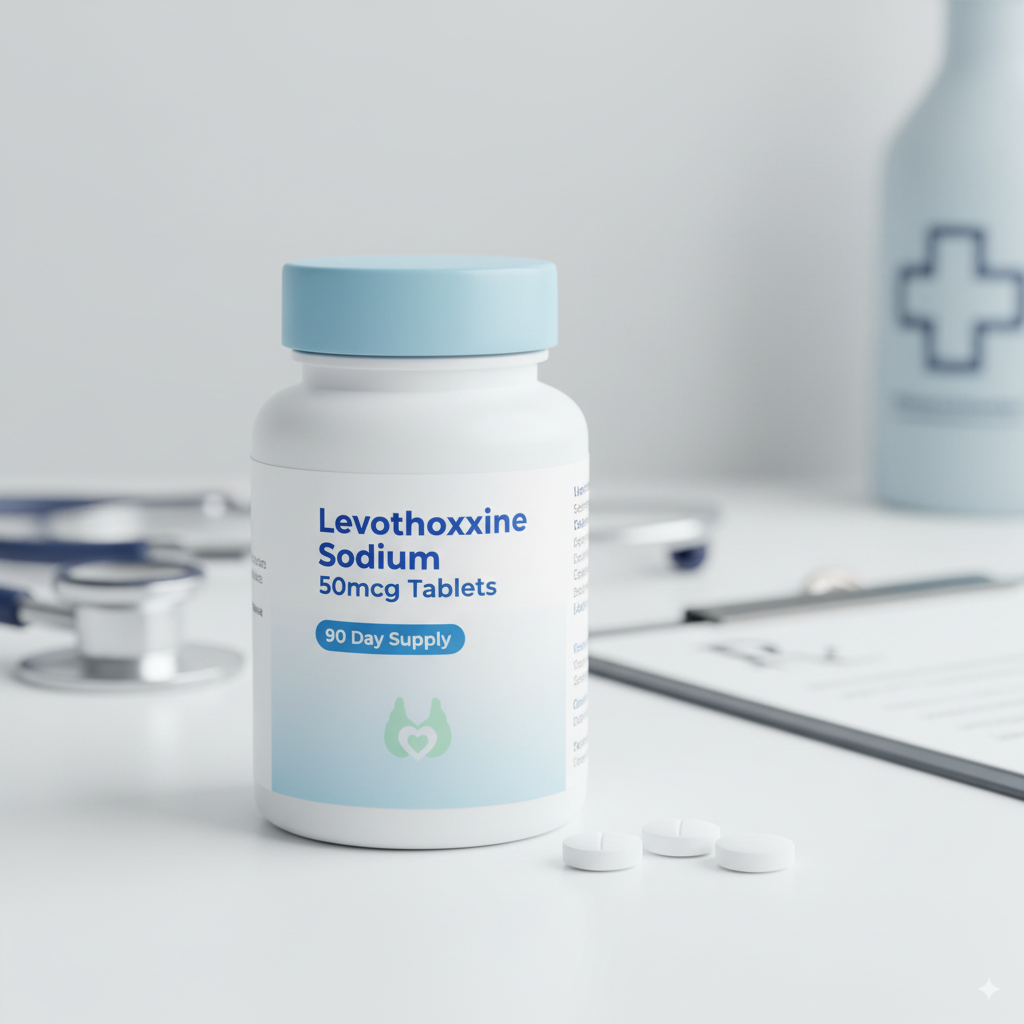
Levothyroxine 50mcg (Featured)
Popular starting dose for mild hypothyroidism, subclinical cases, and elderly patients beginning therapy. 30-day supply.
Start Consultation
Armour Thyroid 60mg (1 grain)
Natural desiccated thyroid containing T4, T3, T2, T1, and calcitonin. 30-day supply. Preferred by patients who want combination therapy.
Start ConsultationReady to Get Your Thyroid Tested?
Our board-certified physicians will review your symptoms, order comprehensive thyroid labs (TSH, Free T4, Free T3, anti-TPO), and develop a personalized treatment protocol -- all through our secure telehealth platform. Most patients have a diagnosis and prescription within 72 hours of lab results.
Start Your Free AssessmentMedical Disclaimer
The information on this page is intended for educational purposes only and does not constitute medical advice, diagnosis, or treatment. Thyroid hormone replacement is a prescription therapy that requires evaluation, diagnosis, and ongoing monitoring by a licensed healthcare provider. Individual results vary. Do not start, stop, or change the dose of any medication without consulting your physician. If you are experiencing symptoms of a medical emergency, call 911 or go to your nearest emergency room immediately.
Content reviewed and approved by the Hormone Pharma Medical Team (licensed physicians and board-certified specialists). Last reviewed April 2026. This page is updated regularly to reflect the latest American Thyroid Association (ATA) and American Association of Clinical Endocrinologists (AACE) clinical guidelines.