

In This Guide
- 1. What Are GLP-1 Medications?
- 2. Available GLP-1 Medications
- 3. SURMOUNT-5: Head-to-Head Comparison
- 4. Medication Comparison Table
- 5. Dosing Schedules
- 6. Side Effects & Management
- 7. Muscle Preservation on GLP-1s
- 8. Who Qualifies?
- 9. Cost & Insurance
- 10. Weight Loss Products
- 11. Frequently Asked Questions
What Are GLP-1 Medications?
GLP-1 receptor agonists -- short for glucagon-like peptide-1 receptor agonists -- are a class of injectable and oral medications that mimic the action of natural incretin hormones produced in the gut. Originally developed and FDA-approved for the management of type 2 diabetes, these medications have since revolutionized the treatment of obesity after landmark clinical trials demonstrated unprecedented weight loss results. As of 2026, GLP-1 receptor agonists represent the most significant pharmacological advance in obesity medicine in decades, with more than 25 million prescriptions written annually in the United States alone.
The body naturally produces GLP-1 in response to food intake. This hormone performs several critical functions: it stimulates insulin secretion from the pancreas in a glucose-dependent manner, suppresses glucagon release (which reduces hepatic glucose output), slows gastric emptying so food remains in the stomach longer, and acts on appetite centers in the hypothalamus and brainstem to increase satiety and reduce hunger. GLP-1 receptor agonist medications amplify and extend these natural effects. While endogenous GLP-1 has a half-life of only 2-3 minutes before being degraded by the enzyme dipeptidyl peptidase-4 (DPP-4), synthetic GLP-1 analogs such as semaglutide and tirzepatide are engineered to resist degradation, providing therapeutic activity that lasts days to a full week after a single injection.
There are two primary categories of GLP-1 medications used for weight management in 2026. Semaglutide (the active ingredient in Ozempic, Wegovy, and Rybelsus) is a single GLP-1 receptor agonist -- it activates only the GLP-1 receptor. Tirzepatide (the active ingredient in Mounjaro and Zepbound) is a dual GLP-1/GIP (glucose-dependent insulinotropic polypeptide) receptor agonist. By activating both incretin receptors simultaneously, tirzepatide produces enhanced effects on appetite suppression, insulin sensitivity, and fat metabolism compared to GLP-1-only medications. This dual mechanism is a key reason why tirzepatide has demonstrated greater weight loss in clinical trials.
Beyond weight loss, GLP-1 medications have shown cardiovascular benefits. The SELECT trial (2023, New England Journal of Medicine) demonstrated that semaglutide 2.4 mg reduced major adverse cardiovascular events (MACE) by 20% in overweight or obese adults with established cardiovascular disease but without diabetes. This finding led to Wegovy receiving an expanded FDA indication for cardiovascular risk reduction in March 2024 -- a landmark decision that accelerated insurance coverage and cemented GLP-1 medications as a cornerstone of cardiometabolic medicine.
Key Takeaway
GLP-1 medications help patients lose 15-25% of total body weight when combined with diet and exercise -- far exceeding the 5-10% typically achieved with lifestyle interventions alone. Tirzepatide (dual GLP-1/GIP agonist) produces the greatest weight loss, while semaglutide (single GLP-1 agonist) offers the most extensive cardiovascular outcomes data.
Available GLP-1 Medications
The GLP-1 medication landscape has expanded rapidly since the first approvals for weight management. Understanding the differences between each product -- their active ingredients, FDA-approved indications, dosing schedules, and clinical profiles -- is essential for making an informed treatment decision with your physician.
Semaglutide Products
Ozempic was FDA-approved in December 2017 for the treatment of type 2 diabetes in adults. Its active ingredient is semaglutide, administered as a once-weekly subcutaneous injection using a pre-filled pen. Ozempic is available in four dose strengths: 0.25 mg (starting dose for the first 4 weeks), 0.5 mg, 1 mg, and 2 mg. Although Ozempic does not carry an FDA-approved indication for weight management, it is widely prescribed off-label for this purpose, and clinical data from the SUSTAIN trial program demonstrated mean weight loss of 10-14% at the 1 mg dose. Ozempic's off-label use for weight loss surged beginning in 2022 and has remained one of the most prescribed medications in the United States.
Wegovy was FDA-approved in June 2021 specifically for chronic weight management in adults with obesity (BMI of 30 or greater) or overweight (BMI of 27 or greater) with at least one weight-related comorbidity. It is also semaglutide, but at a higher maximum dose: 2.4 mg weekly compared to Ozempic's 2 mg maximum. Wegovy follows a structured 5-step dose escalation over 16 weeks: 0.25 mg for weeks 1-4, 0.5 mg for weeks 5-8, 1 mg for weeks 9-12, 1.7 mg for weeks 13-16, and the maintenance dose of 2.4 mg from week 17 onward. In the STEP 1 trial, Wegovy produced a mean weight loss of 14.9% at 68 weeks, with 32% of participants achieving 20% or greater weight loss. In December 2022, Wegovy was additionally approved for adolescents aged 12 and older with obesity. In March 2024, Wegovy received a landmark expanded indication for reducing cardiovascular risk in adults with established cardiovascular disease who are overweight or obese, based on the SELECT trial results.
Rybelsus is the only oral GLP-1 receptor agonist available as of 2026. FDA-approved in September 2019 for type 2 diabetes, Rybelsus contains semaglutide formulated as a daily tablet using the SNAC (sodium N-[8-(2-hydroxybenzoyl)amino]caprylate) absorption enhancer to allow oral bioavailability. Available doses are 3 mg (starter), 7 mg, and 14 mg taken daily on an empty stomach with no more than 4 ounces of water, at least 30 minutes before food or other oral medications. Oral semaglutide produces weight loss of approximately 7-10% at the 14 mg dose, which is less than injectable formulations due to lower bioavailability. It is not FDA-approved for weight management but is prescribed off-label for patients who prefer not to inject.
Tirzepatide Products
Mounjaro was FDA-approved in May 2022 for type 2 diabetes. Its active ingredient, tirzepatide, is the first and only dual GLP-1/GIP receptor agonist approved for clinical use. By activating both incretin receptors, tirzepatide enhances insulin secretion, suppresses glucagon, slows gastric emptying, and reduces appetite through complementary signaling pathways that produce greater metabolic effects than GLP-1 alone. Mounjaro is administered as a once-weekly subcutaneous injection with six available dose strengths: 2.5 mg (starting dose), 5 mg, 7.5 mg, 10 mg, 12.5 mg, and 15 mg. The SURPASS clinical trial program for diabetes demonstrated mean weight loss of 15-22.5% at the highest dose levels -- results that exceeded any previously approved diabetes medication and rivaled bariatric surgery outcomes.
Zepbound was FDA-approved in November 2023 specifically for chronic weight management in adults with obesity (BMI of 30 or greater) or overweight (BMI of 27 or greater) with at least one weight-related comorbidity. Zepbound is the exact same molecule as Mounjaro -- tirzepatide -- with the same dose strengths, same injection device, and same escalation schedule. The distinction is purely regulatory: Mounjaro is approved for diabetes, Zepbound for weight management. In the SURMOUNT-1 trial, tirzepatide at the 15 mg dose produced a mean weight loss of 22.5% at 72 weeks, with 36.2% of participants achieving 25% or greater weight loss and 63% achieving at least 20% weight loss. These results established tirzepatide as the most effective weight loss medication in history, short of bariatric surgery.
Other GLP-1 Medications
Trulicity (dulaglutide) is a once-weekly GLP-1 receptor agonist FDA-approved for type 2 diabetes, manufactured by Eli Lilly. Available in doses of 0.75 mg, 1.5 mg, 3 mg, and 4.5 mg, Trulicity produces more modest weight loss of approximately 5-10% and is considered an older-generation GLP-1 medication. It remains a common option for patients whose primary goal is glycemic control with secondary weight management benefits.
Victoza and Saxenda (liraglutide) are both manufactured by Novo Nordisk and contain the same active ingredient, liraglutide -- a GLP-1 analog requiring daily subcutaneous injection. Victoza (FDA-approved 2010, doses up to 1.8 mg daily) is indicated for type 2 diabetes. Saxenda (FDA-approved December 2014, dose of 3 mg daily) was the first GLP-1 medication specifically approved for weight management and remains an option for patients who prefer a daily injection or who do not tolerate semaglutide. Saxenda produces average weight loss of 8-10% at 56 weeks. As a predecessor to the more effective weekly semaglutide formulations, Saxenda prescriptions have declined substantially since 2022 but it remains available for patients who respond well to liraglutide.
SURMOUNT-5: The First Head-to-Head Comparison
Until 2025, no randomized controlled trial had directly compared tirzepatide and semaglutide. Clinicians and patients were left extrapolating from separate trial programs with different patient populations, endpoints, and methodologies. The SURMOUNT-5 trial, published in the New England Journal of Medicine in 2025, changed that definitively. This was a Phase 3b, randomized, open-label, head-to-head superiority trial comparing tirzepatide (Zepbound) to semaglutide (Wegovy) at their maximum approved weight management doses over 72 weeks in adults with obesity but without diabetes.
The results were unequivocal. Patients randomized to tirzepatide 15 mg achieved a mean body weight reduction of 20.2%, compared to 13.7% for patients on semaglutide 2.4 mg -- a statistically significant difference of 6.5 percentage points. For a 250-pound patient, this translates to approximately 50.5 pounds lost on tirzepatide versus 34.3 pounds on semaglutide. Tirzepatide also demonstrated superiority in waist circumference reduction: -18.4 cm versus -13.0 cm with semaglutide, a 5.4 cm difference that reflects greater reduction in visceral adiposity.
Categorical weight loss endpoints further highlighted the difference. Among tirzepatide patients, 71.6% achieved at least 15% body weight loss, compared to 53.1% on semaglutide. For the more ambitious 20% threshold, 53.6% of tirzepatide patients succeeded versus 30.5% on semaglutide. At the 25% weight loss milestone -- a threshold approaching bariatric surgery outcomes -- 35.4% of tirzepatide patients achieved this target compared to just 16.1% on semaglutide.
Importantly, SURMOUNT-5 also addressed safety and tolerability. Gastrointestinal adverse events were the most common side effects in both groups, as expected with GLP-1 medications. However, the rate of GI-related treatment discontinuation was lower with tirzepatide (2.7%) than with semaglutide (5.6%), suggesting that tirzepatide may be better tolerated despite producing greater weight loss. Nausea occurred in 28% of the tirzepatide group versus 32% of the semaglutide group. Serious adverse event rates were similar between the two treatments.
SURMOUNT-5 Results Summary
| Outcome | Tirzepatide 15 mg | Semaglutide 2.4 mg |
|---|---|---|
| Mean weight loss (%) | -20.2% | -13.7% |
| Waist circumference reduction | -18.4 cm | -13.0 cm |
| Achieved 15% weight loss | 71.6% | 53.1% |
| Achieved 20% weight loss | 53.6% | 30.5% |
| Achieved 25% weight loss | 35.4% | 16.1% |
| GI discontinuation rate | 2.7% | 5.6% |
| Nausea incidence | 28% | 32% |
Clinical Significance
SURMOUNT-5 established tirzepatide as the more effective weight loss medication by a significant margin. However, semaglutide remains an excellent option -- a 13.7% weight loss is clinically meaningful and exceeds the threshold associated with improvements in blood pressure, lipids, glycemic control, and sleep apnea. The choice between medications should consider cost, insurance coverage, availability, and individual patient response, not efficacy alone.
GLP-1 Medication Comparison Table
The following table provides a comprehensive side-by-side comparison of all major GLP-1 medications available for weight management in 2026. Use this as a reference when discussing treatment options with your physician.
| Feature | Ozempic / Wegovy | Mounjaro / Zepbound | Trulicity | Saxenda |
|---|---|---|---|---|
| Active ingredient | Semaglutide | Tirzepatide | Dulaglutide | Liraglutide |
| Mechanism | GLP-1 agonist | GLP-1 + GIP agonist | GLP-1 agonist | GLP-1 agonist |
| Frequency | Once weekly | Once weekly | Once weekly | Once daily |
| Average weight loss | 15-17% | 20-25% | 5-10% | 8-10% |
| Maximum dose | 2.4 mg (Wegovy) | 15 mg | 4.5 mg | 3 mg |
| FDA weight loss approval | Wegovy only | Zepbound only | No | Yes (Saxenda) |
| Route | SubQ injection | SubQ injection | SubQ injection | SubQ injection |
| List price per month | $935-$1,349 | $1,023-$1,060 | $900+ | $1,300+ |
| Cash-pay options | $199-$450 | $200-$500 | Limited | Limited |
Dosing Schedules
Gradual dose escalation is a fundamental principle of GLP-1 therapy. Starting at the lowest dose and increasing incrementally over weeks to months allows your gastrointestinal system to adapt to the medication, reducing the incidence and severity of nausea, vomiting, and diarrhea by more than 60% compared to starting at the full therapeutic dose. Skipping escalation steps or advancing too quickly is the single most common cause of intolerable GI side effects and medication discontinuation.
Wegovy (Semaglutide) Dose Escalation
| Step | Dose | Duration | Notes |
|---|---|---|---|
| Step 1 | 0.25 mg weekly | Weeks 1-4 | Initiation dose; minimal weight loss expected |
| Step 2 | 0.5 mg weekly | Weeks 5-8 | Appetite suppression begins; some patients feel nausea |
| Step 3 | 1 mg weekly | Weeks 9-12 | Clinically significant weight loss typically starts |
| Step 4 | 1.7 mg weekly | Weeks 13-16 | Continued escalation; GI symptoms usually decreasing |
| Step 5 (Maintenance) | 2.4 mg weekly | Week 17 onward | Full therapeutic dose; maximum appetite suppression |
Zepbound / Mounjaro (Tirzepatide) Dose Escalation
| Step | Dose | Duration | Notes |
|---|---|---|---|
| Step 1 | 2.5 mg weekly | Weeks 1-4 | Initiation dose; not intended as therapeutic dose |
| Step 2 | 5 mg weekly | Weeks 5-8 | First therapeutic dose; weight loss begins in earnest |
| Step 3 | 7.5 mg weekly | Weeks 9-12 | Optional intermediate step if tolerating well |
| Step 4 | 10 mg weekly | Weeks 13-16 | Many patients achieve target weight loss here |
| Step 5 | 12.5 mg weekly | Weeks 17-20 | Further escalation if needed for additional weight loss |
| Step 6 (Maximum) | 15 mg weekly | Week 21 onward | Maximum dose; highest efficacy in clinical trials |
Your physician may extend any escalation step beyond the standard 4 weeks if you are experiencing significant GI side effects. There is no clinical disadvantage to slower escalation -- in fact, many clinicians advocate for 8-week steps rather than 4-week steps for patients who are highly sensitive to nausea. The goal is to reach the highest tolerated dose, which is not necessarily the maximum dose. Some patients achieve excellent weight loss at intermediate doses (e.g., 1.7 mg of semaglutide or 10 mg of tirzepatide) and do not need to escalate further.
What to Do If You Miss a Dose
For weekly injections (Wegovy, Zepbound, Ozempic, Mounjaro): if fewer than 5 days have elapsed since the missed dose, take it as soon as you remember and resume your regular schedule. If 5 or more days have passed, skip the missed dose and take the next one on your regularly scheduled day. Do not take two doses within 3 days of each other. If you miss two or more consecutive doses, contact your physician -- you may need to restart at a lower dose to avoid rebound GI side effects, particularly if you are on the higher dose steps.
Key Takeaway
Following the prescribed dose escalation schedule is the single most important thing you can do to tolerate GLP-1 therapy successfully. Rushing to the highest dose does not speed up weight loss -- it increases the risk of severe nausea, vomiting, and premature medication discontinuation.
Side Effects & Management
GLP-1 receptor agonists are generally well-tolerated medications, but gastrointestinal side effects are common -- particularly during dose escalation. Understanding what to expect and how to manage symptoms proactively will improve your treatment experience and reduce the likelihood of discontinuation. In clinical trials, approximately 75-85% of patients who complete the full escalation schedule remain on therapy long-term.
Common Side Effects (Affecting 40-50% of Patients)
- Nausea -- the most frequently reported side effect, occurring in 40-44% of patients during dose escalation. Typically peaks in the first 1-3 days after each dose increase and diminishes over 2-4 weeks as the body adapts. Usually mild to moderate in severity.
- Vomiting -- reported in 15-25% of patients, most commonly during the first 4-8 weeks. More frequent in patients who eat large meals or consume high-fat, greasy foods.
- Diarrhea -- occurs in 20-30% of patients, related to altered GI motility. Usually self-limiting and responsive to dietary modification.
- Constipation -- affects 15-25% of patients due to slowed gastric emptying and reduced food intake. Adequate hydration and fiber intake are critical for management.
- Abdominal pain -- reported in 15-20% of patients, typically described as cramping or discomfort in the upper abdomen that occurs within hours of injection.
Less Common Side Effects
- Headache -- 10-15% of patients, usually mild and transient
- Fatigue -- 5-10%, often related to reduced caloric intake rather than the medication itself
- Dizziness -- 5-8%, more common in patients with significant caloric restriction
- Injection site reactions -- 3-5%, mild redness or itching at the injection site that resolves spontaneously
- Hair thinning (telogen effluvium) -- reported by some patients, related to rapid weight loss and caloric deficit rather than a direct drug effect. Typically temporary and resolves with nutritional optimization.
Serious Side Effects (Rare)
- Pancreatitis -- rare (approximately 0.1-0.3% incidence), but patients should be monitored for severe, persistent abdominal pain radiating to the back. Discontinue medication and seek immediate medical attention if suspected.
- Gallbladder disease -- rapid weight loss from any cause increases the risk of gallstones. Incidence of gallbladder-related events in GLP-1 trials ranges from 1-3%. Symptoms include right upper quadrant pain, especially after fatty meals.
- Gastroparesis (severe gastric slowing) -- a small number of patients experience prolonged gastric emptying that persists beyond normal adaptation. Symptoms include feeling full hours after eating, severe bloating, and repeated vomiting. Dose reduction or discontinuation may be necessary.
- Hypoglycemia -- rare when GLP-1 medications are used alone (their insulin-stimulating effect is glucose-dependent), but risk increases when combined with sulfonylureas or insulin.
Management Strategies
- Eat small, frequent meals -- 4-6 smaller meals per day rather than 2-3 large meals significantly reduces nausea and bloating
- Avoid greasy, fatty, and fried foods -- high-fat foods exacerbate GI symptoms because they are already slow to digest, and GLP-1 medications further slow gastric emptying
- Stay well-hydrated -- aim for at least 64 ounces (2 liters) of water daily; dehydration worsens nausea, constipation, and fatigue
- Follow the escalation schedule strictly -- do not skip steps or double up on doses
- Ginger for nausea -- ginger tea, ginger chews, or ginger supplements (250 mg four times daily) have evidence for reducing nausea
- Time your injection -- some patients tolerate injections better in the evening so that peak nausea occurs during sleep
- OTC anti-nausea medications -- ondansetron (Zofran) or meclizine can be used for persistent nausea under physician guidance
"Ozempic Face"
The term "Ozempic face" refers to the gaunt, hollowed facial appearance that some patients develop after significant weight loss on GLP-1 medications. This is not a direct pharmacological effect of semaglutide or tirzepatide -- it results from the loss of facial subcutaneous fat that occurs with any substantial weight reduction, whether from medication, surgery, or diet alone. The face is often where fat loss is most visually apparent. Patients who lose 15-25% of their body weight may notice sunken cheeks, more prominent nasolabial folds, and under-eye hollowing. Strategies to minimize this include slower weight loss rates (1-2 pounds per week), adequate protein intake to preserve tissue structure, and in some cases, dermal fillers or fat transfer procedures after weight stabilization.
Contraindications
GLP-1 receptor agonists carry an FDA black-box warning regarding the risk of thyroid C-cell tumors. They are contraindicated in patients with a personal or family history of medullary thyroid carcinoma (MTC) or Multiple Endocrine Neoplasia syndrome type 2 (MEN2). In rodent studies, semaglutide and tirzepatide caused dose-dependent thyroid C-cell tumors; while this has not been confirmed in humans, the precautionary contraindication remains. Do not use GLP-1 medications if you have active pancreatitis, a known hypersensitivity to the drug or its excipients, or if you are pregnant or breastfeeding.
Muscle Preservation on GLP-1 Medications
One of the most important -- and often overlooked -- considerations during GLP-1-mediated weight loss is the preservation of lean body mass (muscle). When losing weight through any method, the body draws energy from both fat stores and muscle tissue. Without targeted intervention, approximately 25-40% of total weight lost can come from lean mass rather than fat, according to body composition studies using DEXA scanning. This is not unique to GLP-1 medications -- it occurs with caloric restriction, bariatric surgery, and all pharmacological weight loss approaches. However, the significant magnitude of weight loss achieved with GLP-1 agonists (15-25% of body weight) means the absolute amount of lean mass at risk is substantial.
Loss of lean mass is clinically meaningful because muscle is metabolically active tissue that drives resting metabolic rate, insulin sensitivity, functional capacity, and long-term weight maintenance. Patients who lose excessive muscle during weight loss are more susceptible to weight regain, sarcopenia (age-related muscle loss), reduced mobility, and metabolic dysfunction. Preserving muscle should be a primary goal alongside fat loss.
Evidence-Based Strategies for Lean Mass Preservation
Protein intake is the single most important dietary factor. The American College of Sports Medicine and multiple obesity medicine guidelines recommend 1.2-1.6 grams of protein per kilogram of body weight daily for patients losing weight, with active individuals aiming for the higher end of 1.6-2.2 g/kg. For a 200-pound (91 kg) patient, this means consuming 109-200 grams of protein daily. High-quality protein sources include lean meats, poultry, fish, eggs, dairy, legumes, and whey or casein protein supplements. Because GLP-1 medications reduce appetite and total food intake, patients must be deliberate about prioritizing protein at every meal -- eating protein first when hunger is limited is a commonly recommended strategy.
Resistance training is the second essential intervention. Performing progressive resistance exercise 2-3 times per week -- focusing on compound movements such as squats, deadlifts, bench press, rows, and overhead press -- provides the mechanical stimulus that signals the body to preserve and build muscle tissue. Studies in bariatric surgery patients (who face similar lean mass loss challenges) demonstrate that resistance training reduces lean mass loss from 30-40% of total weight lost to under 20%. Even low-to-moderate intensity resistance exercise produces meaningful muscle-sparing effects in patients who are new to training.
Emerging data from the SURMOUNT-5 trial suggests that tirzepatide may preserve more lean mass than semaglutide, possibly due to the GIP receptor's role in muscle metabolism and its effects on growth hormone signaling. While this finding requires further confirmation, it adds to the rationale for considering tirzepatide in patients concerned about body composition.
Muscle Preservation Protocol
Adequate protein (1.2-1.6 g/kg body weight daily, ideally 1.6-2.2 g/kg for active individuals) combined with resistance training 2-3 times per week can reduce lean mass loss to under 20% of total weight lost. Eat protein first at each meal, consider protein supplementation if appetite is suppressed, and prioritize compound resistance exercises over cardio-only workouts.
Who Qualifies for GLP-1 Weight Loss Medications?
FDA-approved GLP-1 medications for weight management (Wegovy, Zepbound, and Saxenda) are indicated for adults meeting specific criteria based on body mass index (BMI) and the presence of weight-related comorbidities:
- BMI of 30 or greater (clinical obesity) -- regardless of whether weight-related comorbidities are present
- BMI of 27 or greater (clinical overweight) with at least one weight-related comorbidity, including: type 2 diabetes, hypertension (high blood pressure), dyslipidemia (elevated cholesterol or triglycerides), obstructive sleep apnea, polycystic ovary syndrome (PCOS), nonalcoholic fatty liver disease (NAFLD), osteoarthritis, or cardiovascular disease
For GLP-1 medications prescribed off-label for weight management (Ozempic, Mounjaro), the same BMI thresholds generally apply, though prescribing criteria are at the physician's discretion. Off-label prescribing is legal and common in the United States but may affect insurance coverage.
Wegovy is FDA-approved for adolescents aged 12 and older with initial BMI at the 95th percentile or greater for age and sex, based on the STEP TEENS trial which demonstrated 16.1% weight loss in this population at 68 weeks. This made Wegovy the first GLP-1 medication approved for pediatric obesity.
Who Should NOT Take GLP-1 Medications
- Pregnant or breastfeeding women -- GLP-1 medications should be discontinued at least 2 months before a planned pregnancy due to their long half-lives
- Personal or family history of medullary thyroid carcinoma (MTC) or MEN2 -- absolute contraindication due to thyroid C-cell tumor risk in animal studies
- Active pancreatitis -- GLP-1 medications may exacerbate this condition
- Severe gastrointestinal disease -- including gastroparesis, inflammatory bowel disease, or bowel obstruction, as GLP-1 medications slow GI motility
- History of severe hypersensitivity to semaglutide, tirzepatide, or any excipients in the formulation
- Type 1 diabetes -- GLP-1 medications are not appropriate for type 1 diabetes management and do not replace insulin
Not Sure If You Qualify?
Our board-certified physicians evaluate each patient individually based on medical history, BMI, comorbidities, and treatment goals. Many patients who are unsure whether they meet the criteria are surprised to find they qualify. Complete our free online assessment to find out if GLP-1 therapy is right for you.
Cost & Insurance Coverage
The cost of GLP-1 medications remains one of the most significant barriers to treatment. List prices are high, but the actual out-of-pocket cost varies dramatically depending on insurance coverage, manufacturer savings programs, and pharmacy choice. Understanding the full pricing landscape -- and the 2026-2027 Medicare changes that are expanding access -- is essential for making an informed financial decision about treatment.
| Item | List Price | Cash-Pay | With Insurance |
|---|---|---|---|
| Ozempic (monthly) | $935 | $199-$450 | $25-$150 copay |
| Wegovy (monthly) | $1,349 | $199-$450 | $25-$200 copay |
| Mounjaro (monthly) | $1,023 | $200-$500 | $25-$150 copay |
| Zepbound (monthly) | $1,060 | $200-$500 | $25-$200 copay |
| Compounded semaglutide (monthly) | N/A | $150-$300 | Not covered |
| Lab work (quarterly) | $100-$200 | $100-$200 | $0-$50 |
| Provider visits | $150-$300 | $150-$300 | $25-$50 copay |
Medicare Coverage: 2026-2027 Updates
Historically, Medicare Part D excluded coverage for medications prescribed specifically for weight loss under the "anti-obesity medication" exclusion. This changed with the passage of the Treat and Reduce Obesity Act amendments and CMS pilot programs beginning in 2025-2026. Under the new Medicare pilot program, semaglutide (Wegovy) and tirzepatide (Zepbound) are now covered for qualifying beneficiaries at a negotiated price of approximately $50 per month out of pocket, a dramatic reduction from list prices. Eligibility requires a BMI of 30 or greater (or 27+ with comorbidities), enrollment through a participating provider, and completion of a structured lifestyle modification program alongside medication. Full national Medicare coverage for anti-obesity medications is expected to be finalized in 2027.
Commercial Insurance
Coverage for GLP-1 weight loss medications through employer-sponsored and marketplace insurance plans has improved substantially since 2023, though it remains inconsistent. As of 2026, approximately 40-50% of large employer plans cover Wegovy or Zepbound for the weight management indication, up from fewer than 20% in 2023. Coverage is more commonly available when the prescribing diagnosis includes type 2 diabetes (Ozempic, Mounjaro) rather than obesity alone (Wegovy, Zepbound). Step therapy requirements -- in which the insurer mandates trying a less expensive medication first -- are common. Prior authorization is required by most plans and typically involves documentation of BMI, comorbidities, and previous weight loss attempts.
Manufacturer Savings Programs
Both Novo Nordisk (Wegovy, Ozempic) and Eli Lilly (Zepbound, Mounjaro) offer manufacturer savings cards for commercially insured patients. These programs can reduce out-of-pocket costs to as low as $25 per month for qualifying patients. Savings cards are not available to patients with government insurance (Medicare, Medicaid, Tricare). Eli Lilly has also introduced the Zepbound direct-to-consumer program, offering single-dose vials at $399 for the 2.5 mg and 5 mg doses and $549 for the 10 mg, 12.5 mg, and 15 mg doses, available without insurance through LillyDirect.
Compounded Semaglutide
Compounded semaglutide -- semaglutide prepared by compounding pharmacies rather than the brand manufacturer -- has emerged as a lower-cost alternative at $150-300 per month. However, compounded medications are not FDA-approved, not subject to the same manufacturing quality controls as brand-name products, and have faced FDA enforcement actions and quality concerns including inconsistent dosing and contamination. In 2024, the FDA removed semaglutide from the drug shortage list, which triggered regulatory challenges for compounding pharmacies that had been producing it under shortage exemptions. Patients considering compounded semaglutide should discuss the risks with their physician and ensure any compounding pharmacy is accredited by the PCAB (Pharmacy Compounding Accreditation Board) or registered with the FDA as a 503B outsourcing facility.
Save on GLP-1 Medications
At Hormone Pharma, we help patients navigate insurance coverage, apply manufacturer savings cards, and access competitive cash-pay pricing. Our team handles prior authorizations and appeals, and our telehealth model reduces visit costs. View our pricing page for current rates or start your free assessment to learn what your out-of-pocket cost will be.
Weight Loss Medications Available at Hormone Pharma
All medications below are FDA-approved, dispensed from licensed U.S. pharmacies, and require a valid prescription from a licensed physician. Start with a consultation to determine which product is right for you.
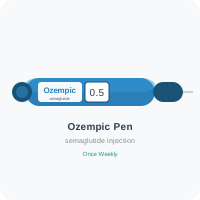
Ozempic Pen 0.25mg / 0.5mg
Pre-filled injection pen for dose initiation and early escalation. Delivers 0.25 mg or 0.5 mg per weekly injection. 4-week supply.
Start Consultation
Ozempic Pen 1mg
Pre-filled injection pen delivering 1 mg per weekly injection. The most commonly prescribed maintenance dose for weight management. 4-week supply.
Start Consultation
Ozempic Pen 2mg
Pre-filled injection pen delivering 2 mg per weekly injection. Maximum Ozempic dose for patients who need additional efficacy. 4-week supply.
Start Consultation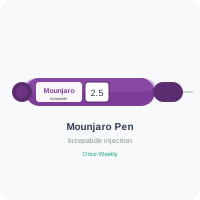
Mounjaro Pen (Tirzepatide)
Dual GLP-1/GIP agonist. The most effective weight loss medication available. Multiple dose strengths from 2.5 mg to 15 mg weekly.
Book Consultation Learn More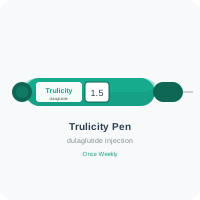
Trulicity Pen (Dulaglutide)
Once-weekly GLP-1 injection for glycemic control and moderate weight management. Available in 0.75 mg, 1.5 mg, 3 mg, and 4.5 mg doses.
Book Consultation Learn MoreReady to Start Your Weight Loss Journey?
Our board-certified physicians will evaluate your health profile, determine if you qualify for GLP-1 therapy, and create a personalized treatment plan -- all through our secure telehealth platform. Most patients receive their prescription within 48 hours of their consultation.
Start Your Free AssessmentMedical Disclaimer
The information on this page is intended for educational purposes only and does not constitute medical advice, diagnosis, or treatment. GLP-1 receptor agonist medications are prescription medications that require evaluation, diagnosis, and ongoing monitoring by a licensed healthcare provider. Individual results vary significantly. Do not start, stop, or change your dose of any medication without consulting your physician. If you are experiencing a medical emergency, call 911 or go to your nearest emergency room immediately.
Content reviewed and approved by the Hormone Pharma Medical Team (licensed physicians and board-certified specialists). Last reviewed April 2026. This page is updated regularly to reflect the latest clinical guidelines, FDA approvals, and published research.